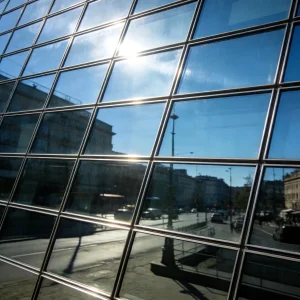
Engineered to complement insulated panel envelopes with superior energy conservation, structural resilience, and modern aesthetics under intense sub-Saharan sunlight.

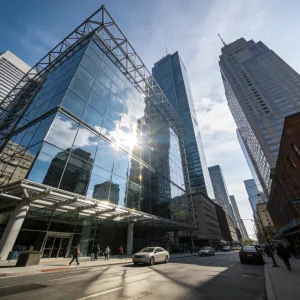
Namibia is experiencing a rapid expansion across key industrial sectors, notably in mining (Uranium, Lithium, and Diamonds), maritime logistics at the Port of Walvis Bay, and agro-processing.
As the Southern African Development Community (SADC) logistics gateway, Namibia requires state-of-the-art cold storage systems, custom modular warehouses, and energy-efficient building envelopes. Given the country's vast geographic landscape, construction projects face extreme daily temperature variations, ranging from near-freezing desert nights to daylight temperatures exceeding 40°C.
Traditional building methods fall short in providing the required R-values and thermal insulation performance to keep HVAC costs low. This operational deficit drives the need for engineered Insulated Building Panel Systems (sandwich panels) that combine rapid deployment, exceptional thermal barrier properties, and long-term durability.
Understanding the thermal kinetics, safety properties, and load-bearing parameters of our insulated sandwich panel assemblies.
Optimized with a thermal conductivity (k-value) of 0.020 W/m·K. Features structural density of 40-42 kg/m³ with tongue-and-groove joints to minimize thermal bridging.
The ultimate choice for industrial facilities requiring Class A non-combustible ratings. Provides up to 4 hours of structural fire resistance while delivering high acoustic damping.
Cost-effective lightweight panel solution ideal for rapid-erect logistics spaces and modular housing camps where insulation requirements are mid-tier.
Discover how direct-from-factory sourcing integrates high precision automation, global compliance certifications, and reliable cargo logistics.
Dongguan Homecoxa Panels Co., Ltd. is a professional insulated sandwich panel manufacturer specializing in roofing, wall, and cold storage solutions. With years of industry experience, the company is dedicated to providing high-performance building materials that meet the evolving demands of modern construction and cold chain infrastructure.
Operating from Dongguan, the manufacturing heart of Southern China, Homecoxa focuses on the research, development, and production of a wide range of insulated panel systems, including roof sandwich panels, wall panels, cold storage panels, and interior partition and ceiling solutions. All products are manufactured using advanced production lines and high-quality raw materials, ensuring excellent thermal insulation, fire resistance, durability, and structural stability. These panels are widely used in industrial plants, warehouses, cold storage facilities, cleanrooms, commercial buildings, and agricultural projects.
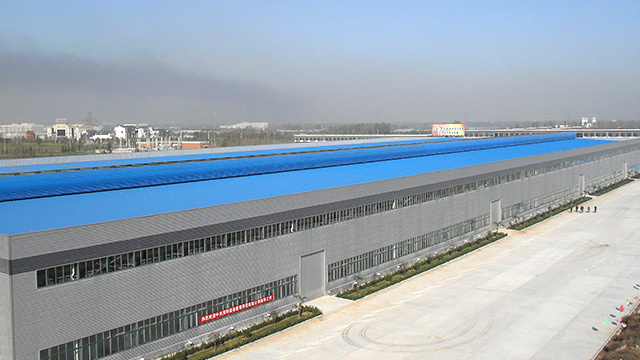
Driven by innovation and quality, Dongguan Homecoxa Panels Co., Ltd. continuously improves its manufacturing processes and product performance to enhance energy efficiency and reduce construction time. The company also offers customized solutions based on specific project requirements, including panel thickness, core materials, and surface finishes.
With a commitment to quality, reliability, and customer satisfaction, Homecoxa has established strong partnerships with clients across global markets. The company strives to deliver sustainable, cost-effective, and easy-to-install panel solutions, supporting customers in building efficient, durable, and environmentally friendly structures worldwide.
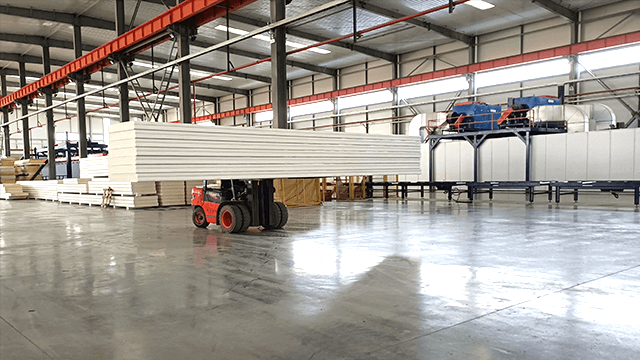
Select the appropriate specifications for your local architecture project requirements in Windhoek or coastal regions.
| Core Type | Thickness (mm) | Thermal Conductivity (W/m·K) | Density (kg/m³) | Fire Resistance Rating | Recommended Applications |
|---|---|---|---|---|---|
| PIR (Polyisocyanurate) | 50 / 75 / 100 / 150 / 200 | 0.020 - 0.022 | 40 - 42 | Class B1 (DIN 4102-1) | Industrial cold chain, temperature-controlled logistics, cleanrooms. |
| PUR (Polyurethane) | 50 / 75 / 100 / 120 / 150 | 0.022 - 0.024 | 38 - 40 | Class B2 | Cold storage walls, walk-in freezers, agricultural packing facilities. |
| Rockwool | 50 / 75 / 100 / 150 / 200 | 0.038 - 0.040 | 100 - 120 | Class A1 (EN 13501) | Mining accommodations, power plants, manufacturing firewalls. |
| EPS | 50 / 75 / 100 / 120 / 150 | 0.035 - 0.038 | 12 - 16 | Class B3 | Cost-sensitive warehouses, site offices, partition walls. |
Our sandwich panel systems are designed for quick assembly, minimal structural footprint, and high resistance to extreme environments.
The marine industry at Walvis Bay relies on constant temperatures for fish processing and shipping. Our PIR panels prevent thermal leaks, keeping energy consumption low even during summer peaks.
Heavy mining operations in remote regions require fast-assembly housing. Homecoxa Rockwool panels provide workers with fireproof, insulated accommodations that block the harsh daytime heat.
As dry-ports extend from Walvis Bay to neighboring landlocked nations, large insulated distribution centers are essential to protect delicate dry goods from rapid temperature changes.
Essential technical insight for architects, quantity surveyors, and project developers importing building systems into Namibia.
Integrate our architectural solutions to build modern, energy-efficient commercial and industrial facilities in Namibia.

 Homecoxa Panels