Explore our core selection of customizable engineering materials, advanced formworks, and modular panels designed for global infrastructure compliance.
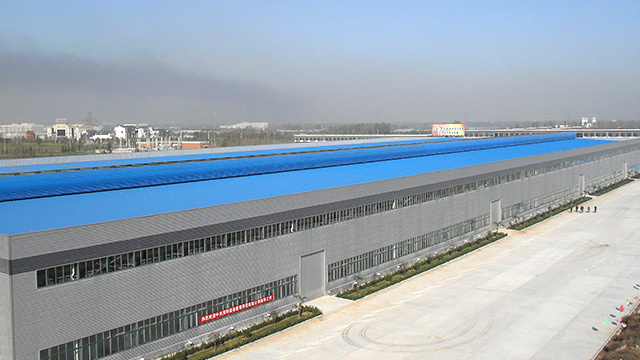
Dongguan Homecoxa Panels Co., Ltd. is a professional insulated sandwich panel manufacturer specializing in roofing, wall, and cold storage solutions. With years of industry experience, the company is dedicated to providing high-performance building materials that meet the evolving demands of modern construction and cold chain infrastructure.
Homecoxa focuses on the research, development, and production of a wide range of insulated panel systems, including roof sandwich panels, wall panels, cold storage panels, and interior partition and ceiling solutions. All products are manufactured using advanced production lines and high-quality raw materials, ensuring excellent thermal insulation, fire resistance, durability, and structural stability. These panels are widely used in industrial plants, warehouses, cold storage facilities, cleanrooms, commercial buildings, and agricultural projects.
Driven by innovation and quality, Dongguan Homecoxa Panels Co., Ltd. continuously improves its manufacturing processes and product performance to enhance energy efficiency and reduce construction time. The company also offers customized solutions based on specific project requirements, including panel thickness, core materials, and surface finishes.
With a commitment to quality, reliability, and customer satisfaction, Homecoxa has established strong partnerships with clients across global markets. The company strives to deliver sustainable, cost-effective, and easy-to-install panel solutions, supporting customers in building efficient, durable, and environmentally friendly structures worldwide.
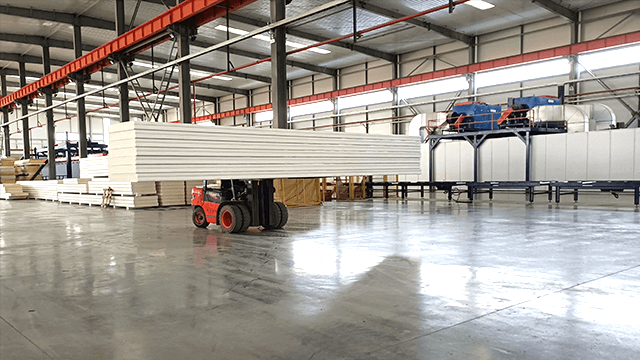
A comprehensive overview of how modern partition technologies are reshaping manufacturing, biological cleanrooms, and flexible architectural layouts globally.
Global supply chains require massive distribution hubs with highly scalable thermal containment. Flexible wall structures enable warehouses to switch dynamically between chilled storage, dry ambient space, and hazardous material chambers.
With cleanroom class certifications (ISO 14644) becoming stricter in semiconductor and pharmaceutical manufacturing, modular flexible partitions serve as airtight boundaries that minimize outgassing and static charges.
Modern building regulations, such as LEED v4 and BREEAM, demand reduced embodied carbon. Modular sandwich panels and flexible components boast zero-waste on-site installation, high recyclability, and outstanding thermal retention.
Across the structural engineering field, traditional drywall partitioning systems are rapidly being phased out in favor of high-performance insulated sandwich panels. The physical structural performance of these systems is characterized by high thermal resistance, low thermal transmittance (U-value), and structural rigidity. In industrial cold storage and modern cleanroom layouts, partitioning must do more than simply divide rooms; they must act as a precise environmental containment barrier. As highlighted in the performance matrices of manufacturers like Dongguan Homecoxa Panels Co., Ltd., core insulation options such as polyurethane (PU) and rock wool achieve fire ratings that prevent flame propagation in multi-tier logistics environments.
Flexible architectural boundaries utilize interlocking joints and tongue-and-groove engineering configurations. When looking at performance factors, structural engineers evaluate the Sound Transmission Class (STC) rating and structural shear stability. Polyurethane core systems offer density ranges of 40-42 kg/m³, providing superb structural thermal values (R-value up to 7.2 per inch of thickness), while Rock Wool sandwich partitions deliver acoustic insulation values up to STC 45dB. This performance ensures that adjacent workspaces remain decoupled, minimizing acoustic bleed-through in highly active industrial zones.
| Core Material Spec | Thermal Conductivity (W/m·K) | Fire Classification | Acoustic Damping (STC) | Primary Industrial Use Cases |
|---|---|---|---|---|
| Polyurethane (PU/PIR) | 0.019 - 0.023 | Class B1 / B2 (GB8624) | 22 - 28 dB | Cold storage, controlled agriculture, logistics hubs |
| Structural Rock Wool | 0.038 - 0.044 | Class A1 / A (Non-combustible) | 35 - 45 dB | High-fire-risk manufacturing, pharmaceutical partition, boiler rooms |
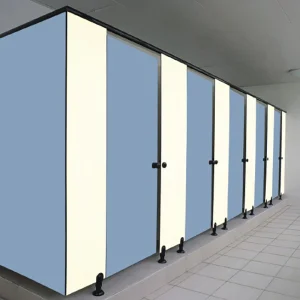
| High-Pressure Laminate (HPL) | 0.25 - 0.35 | Class B1 / Flame Retardant | 30 - 32 dB | Public bathroom partitions, laboratory sterile rooms, cleanroom interior lining |
Understanding the mechanical improvements, smart component additions, and material science breakthroughs driving the partition market.
In modern biotechnology labs and electronic assembly facilities, static-electricity build-up and microbes present high contamination risks. The deployment of cleanroom sandwich wall panels with customized outer coatings (e.g., PVDF, anti-static polyester, or PE) inhibits microbiological growth. The smooth profile surfaces and flush-mount tongue-and-groove joints guarantee easy sanitization and optimal air-flow laminar dynamics.
In seismic zones, partitions must absorb significant kinetic energy without compromising structural integrity. Structural engineers have integrated flexible aluminum track systems and high-tensile fasteners to allow up to 3% horizontal story drift. This technology mitigates wall collapse during seismic incidents and maintains structural load paths.
The convergence of Phase Change Materials (PCM) with traditional core materials is the next frontier. By absorbing latent heat energy during peak operations and releasing it during cooling cycles, smart partition walls act as passive HVAC buffers, reducing electrical energy load profiles by up to 18% in temperate climates.
How flexible partition technologies adapt to localized weather conditions, operational safety codes, and custom zoning challenges.
In Southeast Asia and coastal areas, high moisture levels corrode structural elements. Utilizing high-zinc galvanized steel substrates (up to 275g/m²) and HPL sheet partitions prevents rust and delamination.
European and US pharmaceutical manufacturing relies on certified HVAC integrations. Flush ceiling grids, custom laminar flow hoods, and gastight sealants prevent biological vectors from crossing clean borders.
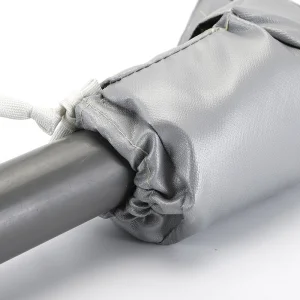
Chemical processing and waste containment demand extreme resistance. Custom fiberglass thermal jackets and anti-corrosive panel profiles protect structural layouts from strong acid and alkali vapors.
Detailed technical specifications and design strategies for deploying modular architectural components in heavy industry.
In massive modern warehousing and production facilities, standard structural methods fail to scale efficiently. Erecting brick walls creates structural load penalties and limits dynamic expansion options. By applying Dongguan Homecoxa Panels Co., Ltd.'s dry-installation sandwich wall technology, developers can install over 1,200 square meters of partition area per week, reducing construction cycles by up to 60%.
Key architectural specifications to consider during initial system procurement include:
Complete project portfolios containing environmental controls, laminar ventilation ceilings, and customized partition components.
Clear, direct technical answers regarding safety standards, core insulation performance, and sourcing parameters from China factories.
 Homecoxa Panels