Engineered for optimal thermal insulation, structural rigidity, acoustic control, and rapid dynamic installation.
Dongguan Homecoxa Panels Co., Ltd. is a professional insulated sandwich panel manufacturer specializing in roofing, wall, and cold storage solutions. With years of industry experience, the company is dedicated to providing high-performance building materials that meet the evolving demands of modern construction and cold chain infrastructure.
Homecoxa focuses on the research, development, and production of a wide range of insulated panel systems, including roof sandwich panels, wall panels, cold storage panels, and interior partition and ceiling solutions. All products are manufactured using advanced production lines and high-quality raw materials, ensuring excellent thermal insulation, fire resistance, durability, and structural stability. These panels are widely used in industrial plants, warehouses, cold storage facilities, cleanrooms, commercial buildings, and agricultural projects.
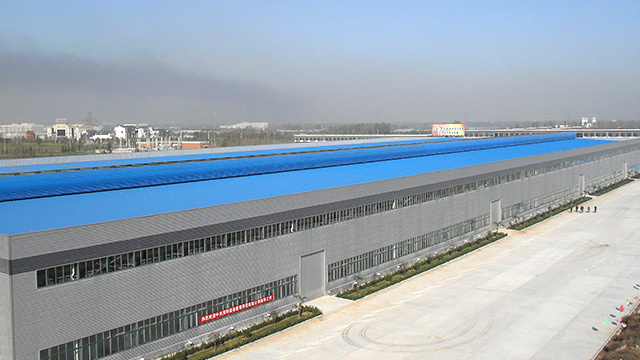
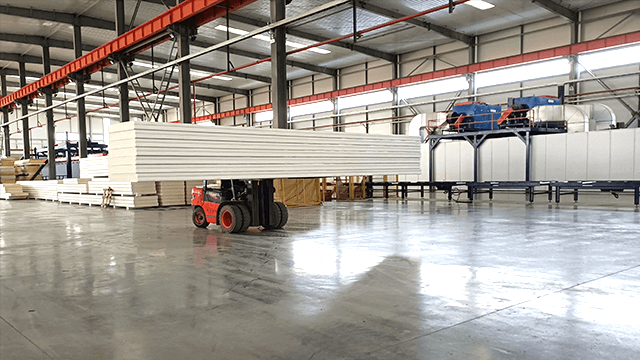
Driven by innovation and quality, Dongguan Homecoxa Panels Co., Ltd. continuously improves its manufacturing processes and product performance to enhance energy efficiency and reduce construction time. The company also offers customized solutions based on specific project requirements, including panel thickness, core materials, and surface finishes.
With a commitment to quality, reliability, and customer satisfaction, Homecoxa has established strong partnerships with clients across global markets. The company strives to deliver sustainable, cost-effective, and easy-to-install panel solutions, supporting customers in building efficient, durable, and environmentally friendly structures worldwide.
The rapid acceleration of global urbanization, paired with strict international net-zero carbon targets, has fundamentally restructured modern commercial building practices and industrial space design. Space demarcation is no longer viewed merely as passive interior partitioning. In 21st-century architectural engineering, efficient space dividers serve as multifunctional structural envelopes designed to regulate ambient microclimates, optimize acoustic resonance, meet rigorous fire safety standards, and minimize HVAC operational overheads.
From massive multi-tenant logistics hubs in Europe to hyper-sterile pharmaceutical cleanrooms in North America and rapid-deploy commercial centers in East Asia, demand for prefabricated modular partition systems has reached an unprecedented peak. Enterprise asset owners are systematically replacing traditional masonry and static drywall with dynamic, demountable, and insulated panelized solutions. This structural evolution is driven by several macroeconomic factors:
Global regulatory bodies (such as ASHRAE Standard 90.1 and the EU Energy Performance of Buildings Directive) require ultra-low thermal transmittance ($U$-values) across building enclosures to decrease corporate scope-1 carbon footprints.
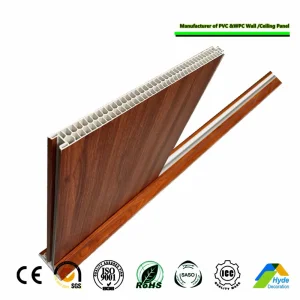
Modern commercial real estate demands dynamic room division. Modular PVC partitions, HPL wall cladding, and prefabricated movable walls allow operational spaces to adapt overnight without structural demolition.
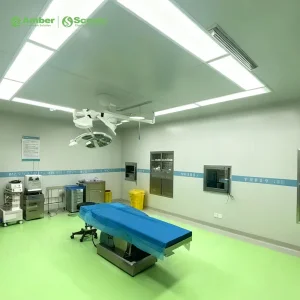
Precision electronics manufacturing and hospital operating rooms require airtight, non-gassing, non-porous partition assemblies like ISO7 modular operating systems with seamless joint interlocks.
SEO & Market Insights: Global market data indicates that modular partition panels and insulated building envelopes are projected to maintain a CAGR of 6.8% through 2030, driven by cold-chain expansion and prefabricated steel building adoption.
When global general contractors, industrial architects, and procurement managers evaluate space divider supply chains, China stands out as the ultimate global hub for manufacturing efficiency, material innovation, and cost optimization. Facilities like Dongguan Homecoxa Panels Co., Ltd. embody the synthesis of high-tier automated continuous production and comprehensive quality assurance protocols.
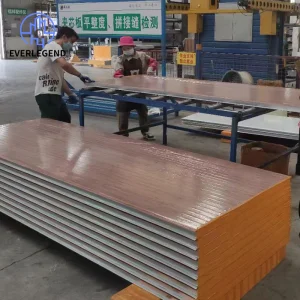
Unlike regional fabricators who rely on manual batching and semi-automated press systems, leading Chinese exporters utilize 200-meter fully automated double-belt continuous polyurethane (PU / PIR) and EPS sandwich panel production lines. Polyols and isocyanates are metered with high-pressure micro-dosing systems, guaranteeing uniform core density (e.g., 40–42 kg/m³ for PIR), zero internal air pockets, and superior structural lamination bonding. This yields panel production capacities exceeding 10,000 square meters per day per line, drastically lowering lead times for massive infrastructure projects.
The industrial concentration in Guangdong and neighboring manufacturing hubs provides unprecedented access to raw materials:
To assist structural engineers and procurement officers in technical evaluation, the table below provides a rigorous material analysis of modern modular space dividers, sandwich panels, and sound isolation core materials.
| Core Material / System | Thermal Conductivity ($\lambda$) | Fire Reaction Rating | Sound Transmission (STC) | Primary Application Target |
|---|---|---|---|---|
| PIR (Polyisocyanurate) Core | 0.020 - 0.022 W/m·K | B-s1, d0 (EN 13501-1) / Class B1 | 28 - 32 dB | Cold Storage, Food Processing, High-R Value Industrial Walls |
| Rockwool / Mineral Wool Core | 0.038 - 0.044 W/m·K | Class A1 Non-Combustible | 34 - 45 dB | Fire-Rated Compartmentation, Power Plants, Public Buildings |
| EPS (Expanded Polystyrene) Panel | 0.033 - 0.038 W/m·K | B1 / Flame Retardant | 26 - 30 dB | Quick-Assemble Temporary Warehouses, Low-Cost Commercial Walls |
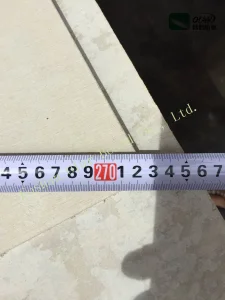
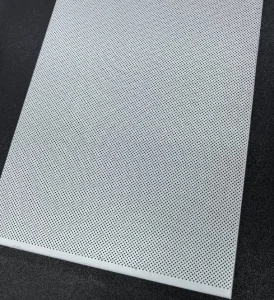
| Fibre Cement Sound Absorption Board | 0.15 - 0.25 W/m·K | Class A Non-Combustible | 40 - 55 dB (Composite) | Concert Halls, Recording Studios, High-Acoustic Auditoriums |
| HPL (High-Pressure Laminate) Cladding | 0.30 W/m·K | B-s1, d0 | 30 - 36 dB | Hospital Interior Corridors, Cleanroom Partition Sheathing |
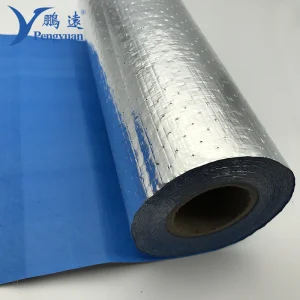
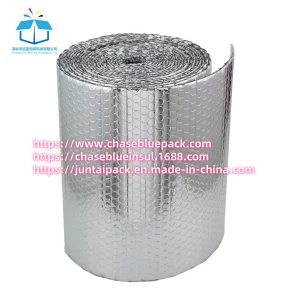
| Reflective Foil Bubble / Woven Fabric | Reflectivity 96-97% | Class 1 / Class B1 | Radiant Barrier (R-3.5+) | Roof Sarking, Radiant Heat Deflection, Crawl Space Shielding |
Acoustic performance in dynamic modular walls (such as individually movable PVC wall systems and fiber cement assemblies) relies on mass-air-mass resonance decoupling. By incorporating multi-layer acoustic dampening membranes, porous mineral cores, and perimeter double-lip rubber bulb gaskets, modern space dividers effectively suppress sound waves across low (125Hz), mid (500Hz), and high (4000Hz) frequency ranges.
Large-scale e-commerce logistics centers utilize lightweight EPS and PIR wall panels to segregate inventory zones. Quick interlock panel tongues reduce onsite assembly times by up to 60% relative to conventional drywall framing, lowering capital expenditure.
Cold storage facilities require strict thermal containment with micro-gap cam-lock panel joining systems. PIR insulated panels stop thermal bridging, eliminate surface condensation, and prevent ambient cold air escaping across freezer (-30°C) boundaries.
ISO Class 7 and Class 5 cleanrooms utilize continuous HPL laminate cladding and flush insulated wall systems. Anti-microbial coatings resist strong chemical sterilizers (e.g., vaporized hydrogen peroxide), ensuring sterile operating zones.
Heavy-duty PVC movable partition walls equipped with top-hung track systems allow corporate conference centers and hotels to instantly reconfigure massive halls into distinct sound-isolated executive meeting rooms.
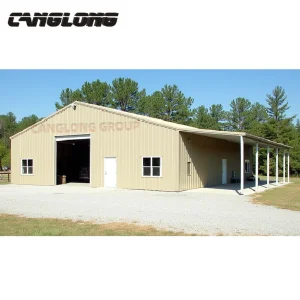
Turnkey steel structures integrated with acoustic fiber cement boards and carbon fiber reinforced insulation boards deliver precise room reverberation times ($RT_{60}$) for live orchestral and theatrical performances.
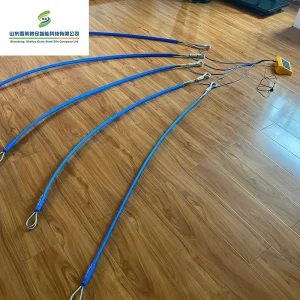
Integrating steel grain silos with humidity and temperature monitoring cable networks ensures optimal crop storage by detecting localized heating spikes and micro-moisture variations inside deep storage bulk bins.
The space partition industry is rapidly evolving beyond basic mechanical barriers toward smart, eco-optimized structural enclosures. Leading manufacturers like Dongguan Homecoxa Panels are incorporating cutting-edge material technologies to meet future green building codes:
Next-generation industrial partition systems incorporate embedded IoT fiber-optic and thermal sensing arrays. These smart sensors stream continuous real-time data regarding core structural moisture levels, thermal flux variations, and early strain detection, connecting straight into automated building management software (BMS).
In accordance with global circular economy standards, modern sandwich panels utilize eco-friendly blowing agents (such as pentane-based micro-foaming technology with Zero Ozone Depletion Potential and negligible Global Warming Potential). Furthermore, steel skins and aluminum frames feature 100% recyclable metallurgies that can be salvaged and repurposed during structure retrofits.
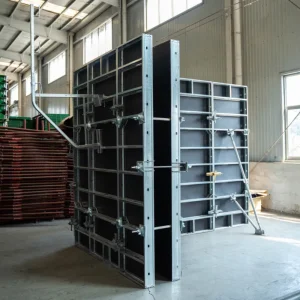
To combat rising site labor costs and construction delays, architectural firms are adopting off-site prefabricated assembly systems. Reusable modular panel formwork and prefabricated acoustic walls are pre-cut, CNC-punched, and pre-wired with electrical conduits in controlled factory conditions, delivering drop-in installation upon jobsite delivery.
Navigating cross-border procurement for major construction projects requires stringent compliance checks. Key procurement evaluation steps include:
Ensure manufacturers hold verified ISO 9001:2015, ISO 14001, CE Certification, FM Global approval (for fire risk assessment), and ASTM E84 flame spread test reports.
Verify panel flexural strength under wind loads (up to 2.0 kPa) and dynamic impact resistance ratings according to EN 14509 standards.
Overseas sea freight requires protective PE film wrapping, heavy-duty EPS corner guards, reinforced wooden pallets, and steel-band strapping to prevent sea-fog oxidation or freight damage.
Expert responses regarding thermal efficiency, acoustic ratings, fire resistance standards, and custom manufacturing options.
Explore our full line of acoustic panels, drainage channels, modular cleanrooms, and industrial HVAC systems.
 Homecoxa Panels