For global buyers, modular construction offers a practical alternative to traditional building methods. Factory-made modules can reduce site disruption, improve schedule visibility, and support consistent quality control. A bedroom module may arrive with wiring, plumbing, insulation, and finishes already installed. This detail changes the buying process.
So, what are the advantages of modular construction for international projects? The answer includes faster assembly, predictable production, lower material waste, and safer factory conditions. Modular systems can also support flexible designs, from compact housing units to schools, clinics, and temporary offices. Buyers may receive clearer cost estimates because much of the work occurs in a controlled facility.
Still, modular construction is not automatically the best choice. Transport distance, crane access, local building codes, and foundation conditions can affect the final result. A supplier’s factory may use advanced inspection procedures, but buyers should request test reports, project references, and detailed warranties. Local professionals should verify structural, fire, energy, and accessibility requirements before production begins.
That step matters.
Experienced buyers also examine packaging, shipping routes, customs documentation, installation teams, and after-sales support. A low factory price can become expensive if modules require redesign after arrival. In my view, the strongest advantage comes from early coordination. Architects, engineers, manufacturers, and logistics providers must share accurate information from the beginning. Mistakes still happen. However, transparent communication and independent inspections can reduce avoidable risks. This guide explores seven advantages that help global buyers compare modular construction with greater confidence and practical judgment.
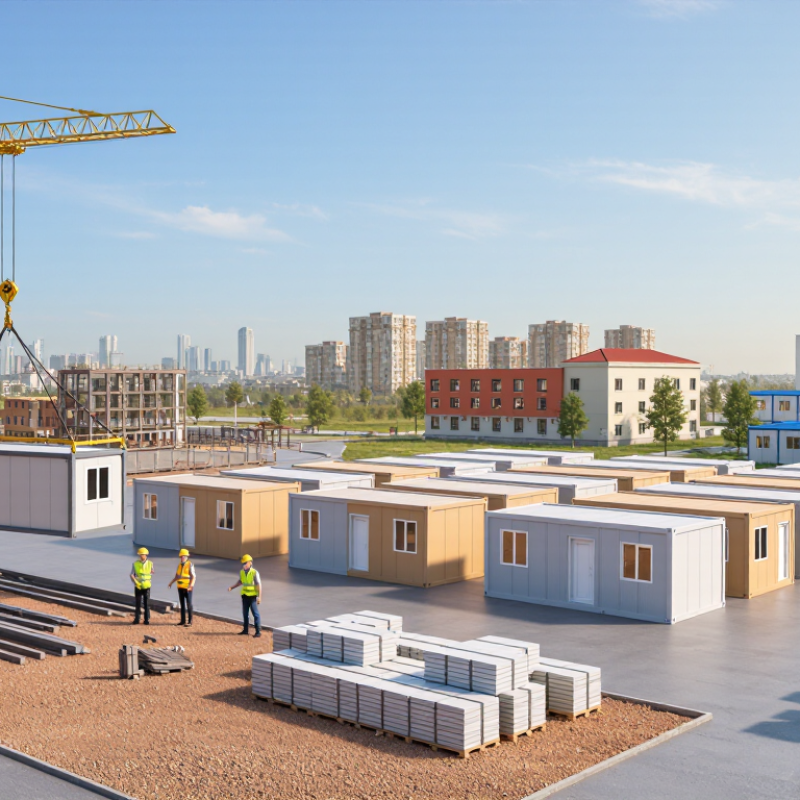
Modular construction is a building method that produces rooms or structural sections in a controlled factory environment. These modules may include walls, floors, wiring, plumbing, insulation, and interior finishes. After quality checks, workers transport them to the site and connect them onto prepared foundations.
The process begins with digital design and engineering coordination. Factory teams then cut materials, assemble components, and inspect each stage before shipment. At the site, cranes position the modules, while local crews complete connections, utilities, and exterior work. This approach can reduce weather delays, material waste, and on-site labor needs. It also gives global buyers more predictable production schedules. However, transportation size limits, import procedures, local building codes, and foundation accuracy require early planning. A small measurement error can create expensive delays.
Tips: Request certified drawings, material specifications, inspection records, and installation instructions before placing an order. Confirm who manages shipping, site preparation, utility connections, and final approvals. Visit a completed project if possible. Photos are useful, but they can hide weak joints or poor finishing. Modular construction is efficient, yet it is not a perfect shortcut. Careful coordination still matters.
7 Best Advantages of Modular Construction for Global Buyers
Faster Project Delivery Through Off-Site Manufacturing
For global buyers, modular construction can shorten delivery schedules through controlled off-site manufacturing. Factory teams build wall panels, floors, and service modules while site preparation happens simultaneously. This parallel workflow reduces idle time between trades and can move projects toward occupancy sooner.
The advantages are practical. Buyers may gain faster revenue, lower weather exposure, fewer site disruptions, and more predictable labor planning. Factory production also supports repeatable measurements and documented inspections. Workers can install plumbing, wiring, insulation, and finishes in a monitored environment. Quality improves when production teams follow approved drawings and inspection records.
Details matter. A completed module can leave the factory with doors fitted, surfaces protected, and utilities tested. At the site, cranes place units onto prepared foundations, often within a tightly planned sequence. Transportation routes, lifting limits, local codes, and customs requirements still require careful coordination. A missed permit or incorrect road survey can erase part of the schedule advantage.
That risk is real.
Experienced project teams freeze designs early, verify tolerances, and maintain clear communication across time zones. Digital drawings help, but they do not replace physical checks. Sometimes, a small design change creates expensive rework after manufacturing begins. Buyers should compare factory capacity, inspection procedures, packaging methods, and installation records before signing contracts. Faster construction is valuable only when speed supports safety, durability, and dependable handover.
| No. | Key Advantage | How Off-Site Manufacturing Helps | Typical Benchmark | Value for Global Buyers | Recommended KPI |
|---|---|---|---|---|---|
| 1 | Faster Project Delivery | Modules are fabricated in a controlled facility while site preparation, foundations, and utility work take place in parallel. | 20%–50% shorter schedules are commonly reported when design, procurement, and factory production are well coordinated. | Earlier occupancy, faster revenue generation, and reduced exposure to site-related delays. | Total project duration; factory production days; on-site installation days. |
| 2 | More Predictable Costs | Repetitive production, standardized components, and early procurement make quantities and labor requirements easier to control. | Potential savings of approximately 5%–20%, depending on design repetition, project scale, logistics, and local labor costs. | Improved budget planning and fewer cost surprises caused by weather, rework, or site inefficiency. | Cost variance; change-order value; cost per square meter; procurement savings. |
| 3 | Consistent Quality | Indoor production reduces exposure to rain, dust, temperature changes, and inconsistent site conditions. Factory inspections can be repeated at defined checkpoints. | Lower rework risk is achievable through standardized work instructions, inspection plans, and documented quality checks. | More uniform finishes and easier quality verification before modules leave the factory. | Defect rate; first-pass acceptance rate; rework hours; inspection nonconformities. |
| 4 | Reduced Material Waste | Factory cutting plans, controlled storage, repeatable dimensions, and centralized material handling help reduce off-cuts and damage. | Waste reductions of about 20%–50% are often achievable compared with conventional site-based construction, depending on the baseline. | Lower disposal costs, improved material efficiency, and stronger environmental reporting. | Waste generated per square meter; material utilization rate; recycling rate. |
| 5 | Improved Worker Safety | A larger share of work is completed at ground level in a managed facility, reducing some weather exposure, work-at-height activities, and congested site operations. | Fewer high-risk site activities can result when lifting plans, factory controls, and installation procedures are properly managed. | Potentially lower incident exposure and more consistent safety training across production teams. | Recordable incident rate; lost-time injuries; near-miss reports; safety audit score. |
| 6 | Lower Site Disruption | Shorter site activity reduces vehicle movements, noise, dust, on-site storage needs, and the time surrounding communities are affected. | Fewer site working days and deliveries are possible because completed modules arrive close to the installation date. | Useful for urban, remote, healthcare, education, hospitality, and other projects with restricted access. | Site working days; delivery count; noise or dust complaints; storage footprint. |
| 7 | Scalable Global Deployment | Repeatable module designs can be adapted for multiple locations while maintaining common specifications, documentation, and quality procedures. | Higher repeatability across multi-site programs is possible when local codes, transport limits, and installation requirements are addressed early. | Simpler portfolio rollout, easier training, and more consistent performance across markets. | Percentage of standardized components; approval lead time; installation productivity; regional adaptation cost. |
Note: Benchmark ranges are indicative industry ranges rather than guaranteed results. Actual performance depends on project design, module size, production capacity, transport distance, local regulations, site conditions, procurement strategy, and installation planning.
Modular construction can lower total costs by moving repeated work into a controlled factory environment. The 2017 Reinventing Construction report estimated that modular methods could reduce construction costs by up to 20%. It also indicated schedule reductions of 20% to 50%, improving cash-flow planning for global buyers.
Factory production limits weather delays, material damage, and unpredictable site labor. Workers assemble walls, floors, and service sections with repeatable processes. Fewer activities compete for space on a crowded site. That can reduce rework and waste. A 2020 SmartMarket report on prefabrication found that contractors often connect off-site production with better cost performance and schedule control.
The budget becomes clearer earlier. Buyers can compare standardized modules, transport needs, installation hours, and local finishing costs before production begins. This supports more reliable procurement planning across borders. However, savings are not automatic. Poor design coordination, difficult shipping routes, or late specification changes can erase factory advantages. That is the uncomfortable part.
Experienced buyers should request a detailed cost model. It should separate factory work, freight, customs, foundations, utilities, and site installation. Regional labor rates also matter. A cheaper module may create expensive local adjustments. Strong technical reviews and realistic contingency allowances remain essential for predictable budgets.
Lower Construction Costs and More Predictable Budgets
Modular construction can improve budget predictability by moving more work into a controlled factory environment. Published industry benchmarks commonly report potential reductions of approximately 20% in total project costs, 30% in material waste, 30% in onsite labor requirements, and 30–50% in construction time compared with conventional delivery. Actual results depend on design complexity, location, logistics, financing, and local regulations.
Source note: Indicative benchmark ranges synthesized from publicly available government and construction-industry studies; figures are not guarantees for individual projects.
Modular construction gives global buyers more control over quality before modules reach the building site. Production happens indoors, where temperature, tools, and materials remain easier to manage. Factory teams follow repeated processes, reducing variation between rooms or structural sections. Inspectors can photograph connections, plumbing lines, insulation, and surface finishes during each production stage. This documentation improves traceability and supports more reliable purchasing decisions. Yet it is not flawless. A rushed inspection may miss hidden moisture or alignment problems. Buyers should review test records and arrange independent checks when practical.
Safety also improves because fewer tasks occur in unstable outdoor conditions. Workers assemble walls, floors, and service systems on level platforms. This can reduce exposure to rain, mud, and scattered materials. On-site installation usually requires fewer cutting and welding activities. Clear lifting plans, trained crews, and verified equipment remain essential. Small details matter. A poor connection can create serious risks, even when most factory work is excellent.
Sustainability comes from controlled material use and shorter site activity. Factories can measure offcuts, reuse packaging, and separate waste more consistently than many temporary sites. Faster installation may reduce noise, dust, fuel use, and disruption near neighboring properties. However, transportation can increase emissions when modules travel long distances. Responsible buyers should compare factory efficiency with delivery distance, local materials, repair access, and expected service life. A lower-waste process is valuable, but it still needs honest measurement rather than optimistic assumptions.
Flexible modular construction helps buyers adapt buildings to different markets and changing business needs. Standard modules can support apartments, clinics, classrooms, offices, and worker housing. Their dimensions may be adjusted for local land conditions, climate, and transport limits. A coastal project may need corrosion-resistant finishes. A cold region may require thicker insulation and controlled ventilation. This practical adaptability reduces redesign work and supports more consistent quality.
Future expansion is another important advantage. Buyers can reserve space for extra modules, service routes, and utility connections. A small facility might begin with four units, then grow to twelve. Construction can also happen in phases, which may protect cash flow and reduce disruption on active sites. However, flexibility is not automatic. Poor early planning can make later additions expensive. Local engineers should check foundations, fire safety, drainage, accessibility, and building requirements before production begins. Details matter.
Tips: Create a flexible room schedule before ordering modules. Mark which walls, doors, and services may change later. Compare transport routes, lifting access, and local installation skills. Ask for clear drawings, material specifications, inspection records, and a realistic maintenance plan. A design that looks adaptable on paper may fail beside a narrow road or limited utility network. Review the plan with local professionals, and leave some room for revision.
It produces rooms or structural sections inside a controlled factory. Modules may include walls, floors, wiring, plumbing, insulation, and interior finishes. Workers later connect them on prepared foundations.
The process begins with digital design and engineering coordination. Factory teams cut materials, assemble components, and inspect each stage. Cranes place finished modules on site. Local crews complete utilities, connections, and exterior work.
It can reduce costs by moving repeated work into a factory. Controlled production may limit weather delays, material damage, and site waste. Savings are not guaranteed. Shipping, customs, foundations, and local labor can change the final budget.
Request a cost model with separate factory, freight, customs, and installation charges. Include foundations, utilities, local finishing, and regional labor rates. Add a sensible contingency allowance. A cheap module may require costly local adjustments.
Factory conditions can make temperature, tools, and materials easier to control. Repeated processes may reduce differences between rooms. Inspectors can document plumbing, insulation, joints, and surface finishes. Still, hidden moisture or alignment problems may escape a rushed inspection.
Many tasks happen on level indoor platforms instead of muddy outdoor areas. Workers may face less rain, scattered materials, cutting, and welding. Safety still depends on trained crews and verified lifting equipment. Small details matter.
Factories can measure offcuts, reuse packaging, and separate waste more consistently. Shorter site work may reduce dust, noise, fuel use, and neighborhood disruption. Long-distance transport can increase emissions. The greener option depends on delivery distance, materials, and service life.
Request certified drawings, material specifications, inspection records, and installation instructions. Confirm responsibility for shipping, site preparation, utilities, and final approvals. Check foundation measurements carefully. A small error can create an expensive delay.
A visit can reveal joint quality, finishing, access details, and maintenance concerns. Photographs may hide weak connections or uneven surfaces. Independent checks are useful when practical. Photos are not enough.
Modular construction is a building method in which components are manufactured in controlled off-site facilities and then transported to the project location for assembly. This approach allows site preparation and module production to happen at the same time, helping global buyers complete projects faster and respond more efficiently to market demand. So, what are the advantages of modular construction? Key benefits include shorter delivery schedules, lower labor and material waste, and more predictable project budgets.
Because modules are produced under consistent quality controls, construction can achieve reliable performance, improved worker safety, and better resource efficiency. Modular buildings can also support sustainability through reduced on-site disruption and optimized material use. In addition, their designs can be adapted to different climates, regulations, space requirements, and cultural preferences. Buyers may select flexible layouts, add modules as needs grow, or relocate certain structures, making modular construction a practical solution for commercial, residential, educational, healthcare, and temporary projects across diverse global markets.

Homecoxa Panels