What Is the Future of Sustainable Construction Materials?

Time:2026-11-25 Author:Sophia
0%

What is the future of sustainable construction materials? It will be shaped by choices made on real building sites, not by promising labels alone. Architects, engineers, contractors, and manufacturers are testing lower-carbon concrete, recycled steel, responsibly sourced timber, and bio-based insulation. Each option has trade-offs. A material’s benefits depend on how it is produced, transported, installed, maintained, and eventually reused.

Chemist Michael Braungart, co-author of Cradle to Cradle, expresses a key circular-design idea in three words: “Waste is food.” In construction, that means treating demolition debris as a potential resource, not automatically sending it to landfill. It also means designing components that can be repaired, separated, and reused. That sounds straightforward. It is not always.

Concrete still matters because it is durable and widely available, while lower-carbon alternatives may face cost, supply, or performance limits in particular regions. Timber can store carbon, but sourcing, fire safety, and long-term forest management require careful assessment. These details matter more than a green claim on a product sheet. Reliable comparisons need transparent life-cycle data and clear project conditions.

The next generation of materials may combine recycled content, renewable feedstocks, and digital tracking. Yet innovation alone will not make buildings sustainable. Better specifications, skilled installation, and honest measurement are essential. Some solutions will disappoint. That is worth admitting. A credible future will be built through evidence, practical testing, and willingness to revise what does not work.
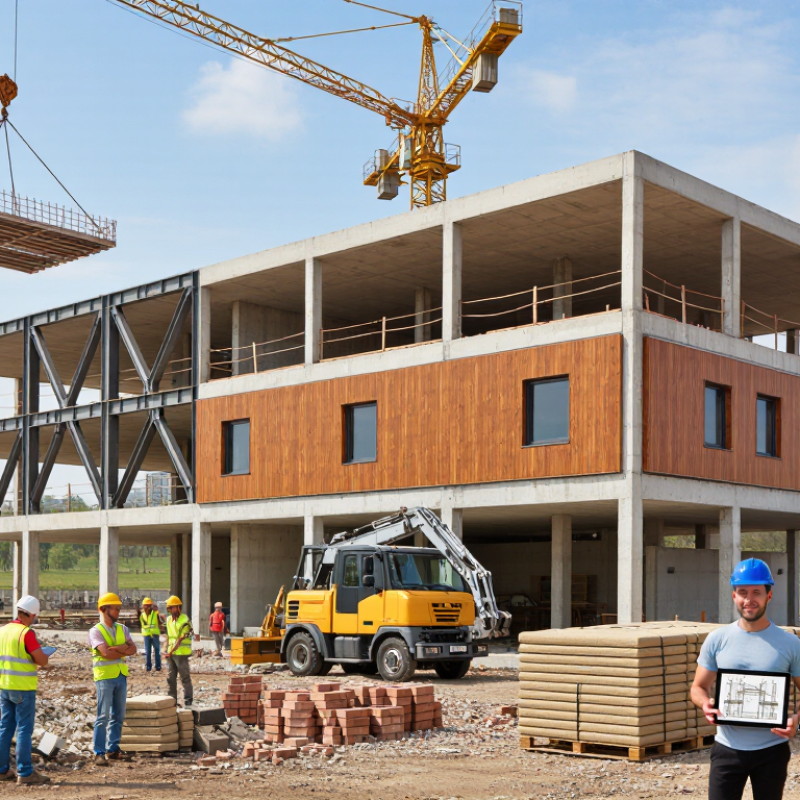
What Is the Future of Sustainable Construction Materials?

What Makes a Construction Material Sustainable?

A material is not sustainable simply because it is labeled natural or recycled. Its full life cycle matters: extraction, processing, transport, use, and end-of-life. A timber beam may store carbon, but its benefits depend on responsible forestry, drying energy, and a long service life. Concrete can last for decades, yet cement production carries a substantial emissions burden. Context matters.

Compare materials that perform the same job, using verified environmental product declarations where available. These documents report impacts such as greenhouse-gas emissions and resource use, though assumptions and data quality can vary. Durability is practical sustainability: a floor that withstands wet boots and repeated repairs may avoid early replacement. Maintenance counts too. A low-impact finish that needs frequent stripping may create more waste over time.

Health and circularity also belong in the assessment. Check for harmful indoor emissions, and ask whether components can be repaired, reused, or separated cleanly. Transport distance is worth noting, but a nearby material is not automatically better if it performs poorly or needs replacement sooner. Honestly, comparisons are messy; a single score can hide trade-offs. That uncertainty should be stated, not polished away.

What Makes a Construction Material Sustainable?

Indicative embodied carbon by material, measured in kilograms of CO₂ equivalent per kilogram of material.

How to read this: Lower embodied carbon can help reduce a building’s climate impact. These rounded, indicative cradle-to-gate factors are based on the Inventory of Carbon and Energy (ICE) Database, Version 3.0. Actual values vary with product design, recycled content, sourcing, and manufacturing. Carbon alone does not determine sustainability; durability, reuse, and responsible sourcing matter too.

Which Materials Are Shaping the Next Generation of Building?

The next generation of buildings is taking shape through materials that use less virgin resource and carry lower emissions. Low-carbon concrete mixes can replace part of cement with calcined clay or other supplementary materials. Their performance depends on local ingredients and careful testing. A mix that works well in one region may not suit another. Reclaimed steel also has promise: salvaged beams can return to service, but their condition and previous use need verification. Small details matter.

Mass timber offers strength with less weight, and its exposed surfaces can bring warmth to a room. It still requires thoughtful design around moisture, fire protection, and sourcing. Bio-based insulation made from materials such as wood fiber or cellulose can help limit heat loss and support comfortable interiors. Recycled glass and reclaimed brick can reduce waste, though sorting and processing take energy. No single material is best everywhere. Transport distance, durability, maintenance, and the building’s full life cycle all affect the real benefit. These choices are improving, but their trade-offs deserve more honest attention. A beautiful material is not automatically a responsible one.

How Are New Materials Designed and Tested?

What Is the Future of Sustainable Construction Materials?

How Are New Materials Designed and Tested?

Designing a lower-impact construction material begins with a specific job: a wall panel, insulation layer, or floor finish. Teams study available feedstocks, energy use, transport distance, and what happens when the material is removed. Recycled content may reduce waste, but it does not automatically make a product durable or easy to reuse. Small changes matter.

A first sample is mixed in controlled batches, then shaped and cured under recorded conditions. The team measures strength, weight, water absorption, and thermal performance against the intended use. A panel might be weighed before and after a damp-weather cycle. Test methods should reflect real exposure, including temperature changes and repeated wetting. The first mix is rarely elegant.

Testing also looks for trade-offs. A material that insulates well may crack during handling; one that resists moisture may require more energy to produce. Researchers compare results across multiple samples, rather than trusting one promising specimen. They also document failures, since a clean lab result can miss problems on a busy construction site. Testing cannot predict everything.

Before wider use, independent review and field trials can help confirm performance and clarify installation needs. Published data should explain test conditions, sample size, and limits, so designers can judge whether results apply to their project. Some conclusions remain uncertain, and that uncertainty belongs in the record.

What Is the Future of Sustainable Construction Materials? — How Are New Materials Designed and Tested?

Material or approach How it is designed Potential sustainability benefit How it is tested Key considerations for use
Blended cement and concrete Portland cement is partly replaced with supplementary cementitious materials, such as slag, fly ash or calcined clay. Mix proportions are adjusted to meet strength, workability and curing requirements. Using less clinker can reduce emissions associated with cement production. The outcome depends on the mix, constituent materials, transport and manufacturing energy. Concrete compressive strength can be measured using ASTM C39/C39M. Length change can be evaluated using ASTM C157/C157M. Environmental impacts can be assessed through life-cycle assessment (LCA) and reported in an environmental product declaration (EPD). Availability of supplementary materials varies by region. Strength development and durability should be evaluated for the intended climate, exposure and construction schedule.
Alkali-activated materials Aluminosilicate-rich powders, including certain industrial by-products or calcined clays, are reacted with alkaline activators to form a hardened binder. Some formulations can reduce reliance on Portland-cement clinker and make use of secondary materials. Their environmental performance depends on precursor processing, activator production and transport. Where appropriate, hardened concrete can be tested for compressive strength using ASTM C39/C39M. Durability, setting and curing behavior require evaluation with methods suited to the specific formulation and intended application. Formulations differ substantially, and test methods developed for conventional cement may not capture every relevant property. Consistent supply, safe handling and local code acceptance matter.
Mass timber, including cross-laminated timber Timber boards are layered and bonded into structural panels or members. Design accounts for grain direction, moisture, connections, load paths and fire protection. Timber can substitute for some more emissions-intensive structural materials. Its climate benefit depends on forestry practices, processing, building life, end-of-life scenarios and the LCA method used. Structural timber properties can be tested using EN 408. Fire resistance of building elements can be evaluated using tests such as ASTM E119; the applicable method depends on the assembly and jurisdiction. Moisture management, connection detailing, fire design and responsible forest sourcing are essential. Biogenic carbon stored in timber should be reported transparently in whole-life carbon assessments.
Steel with recycled content Steel is produced using varying proportions of recycled scrap and primary iron. Structural grades are selected to meet strength, ductility, fabrication and design requirements. Recycling steel can reduce demand for primary raw materials. Emissions vary with the production route, electricity mix, scrap quality and processing, so recycled content alone does not determine climate impact. Tensile properties can be measured using ASTM E8/E8M. Product-specific EPDs and LCA following ISO 14040 and ISO 14044 can help compare environmental impacts using consistent boundaries. Check grade, traceability, recycled-content documentation and the EPD’s scope. Comparisons should use equivalent functional units and account for service life and reuse potential.
Cellulose-fiber insulation Fibers made largely from recycled paper are processed into loose-fill or other insulation products. Product design addresses density, installation method, fire performance and moisture behavior. It can use recycled feedstock and reduce heat flow through building envelopes when correctly installed, helping lower operational energy demand. Thermal resistance can be measured using ASTM C518. Surface-burning characteristics can be evaluated using ASTM E84. Testing should use the product form and installation conditions relevant to the project. Performance depends on correct installation, air sealing and moisture control. Fire-test results for a product should not be interpreted as a measure of fire resistance for a complete wall or floor assembly.
Reclaimed and reused building components Existing components are surveyed, selectively removed, inspected, repaired where needed and specified for reuse in a new or renovated building. Direct reuse can avoid some new manufacturing and reduce construction waste. Benefits depend on recovery, cleaning, transport, processing and how much new material is displaced. Testing is component-specific: structural elements may need dimensional, condition and load-capacity checks; other products may require testing for relevant safety and performance requirements. LCA can assess the reuse scenario. Documentation, contamination checks, remaining service life, code compliance and reliable supply should be established early in design. Reuse is most practical when components are identified before demolition.

Note: Standards listed are examples, not universal requirements. The appropriate test protocol depends on the material, intended use and local regulations. EPDs report environmental information using defined product-category rules; they do not, by themselves, certify that a product is sustainable.

What Challenges Limit Their Wider Adoption?

Sustainable construction materials face a practical test: can they perform reliably, arrive on time, and fit existing budgets? The GlobalABC and UNEP 2023 Global Status Report found that buildings and construction accounted for 37% of global energy- and process-related CO₂ emissions in 2022. The sector also used 34% of global energy. The pressure to change is clear. But lower-carbon concrete, recycled aggregates, and responsibly sourced timber are not equally available everywhere. A contractor ordering concrete needs predictable setting times and strength, not just a lower-carbon claim. Supply gaps can mean longer lead times or extra transport, which may erode some environmental gains.

Cost and proof are harder than they look. The International Energy Agency estimates cement production causes about 7% of global CO₂ emissions, yet reducing cement’s impact depends on technical changes, suitable materials, and credible emissions data. Smaller suppliers may lack the testing records required for specifications and insurance. Project teams also need to assess moisture, fire performance, durability, and maintenance—not only carbon at installation. That takes expertise. Comparing products remains difficult when environmental declarations use different boundaries or omit key life-cycle stages. I would not treat one carbon figure as a complete answer; it can hide trade-offs. Until procurement rewards verified whole-life performance, familiar materials may keep winning, even when better options are available.

How Could Sustainable Materials Transform Construction?

Sustainable materials could transform construction from a resource-heavy process into one that uses less virgin material and creates less waste. Recycled steel, reclaimed timber, and lower-carbon concrete can reduce a building’s embodied emissions, depending on how they are produced and transported. The change reaches the job site, too. Crews may need different tools, installation methods, or training. A reclaimed beam can carry character, but its dimensions may vary. That takes planning.

These materials can also encourage buildings designed for repair and reuse. Bolted connections, for example, may make components easier to remove and use again than permanent adhesives. In practice, that requires careful detailing and coordination between designers, suppliers, and builders. It is not always cheaper or simpler at the start. Availability can be uneven, and performance must suit local weather, fire-safety needs, and maintenance plans. A material labeled “green” is not automatically the best choice. Comparing lifecycle impacts and verified product data helps teams make more grounded decisions. Even then, the data can be incomplete.

Tips: Ask for documented environmental data, not just broad sustainability claims. Check local supply and installation requirements early. Leave room in the schedule for testing unfamiliar materials. That small step can prevent costly surprises.

FAQS

Which materials can lower a building’s environmental impact?

Options include lower-carbon concrete, reclaimed steel, mass timber, wood-fiber insulation, recycled glass, and reclaimed brick. Their benefits depend on sourcing, transport, durability, and maintenance.

How can lower-carbon concrete be made?

Some mixes replace part of the cement with calcined clay or other supplementary materials. Local ingredients matter. A mix suitable for one region may need testing elsewhere.

What should teams check before using reclaimed steel?

They should verify each beam’s condition, dimensions, and previous use. A visual inspection alone may not tell the whole story.

What design details matter for mass timber?

Designers need to plan for moisture, fire protection, and responsible sourcing. Exposed timber can make a room feel warm, but appearance is not proof of sustainability.

What makes sustainable materials difficult to adopt widely?

Supply can be uneven, delivery times longer, and budgets harder to predict. Contractors also need reliable strength, setting times, and installation guidance.

Why is it hard to compare environmental claims?

Product declarations may use different boundaries or leave out life-cycle stages. One carbon figure is not enough. The missing details matter.

What performance checks should project teams consider?

They should review carbon data alongside durability, moisture, fire performance, and maintenance needs. Testing unfamiliar materials early can prevent schedule surprises.

Can building components be designed for reuse?

Bolted connections may make components easier to remove than permanent adhesives. Reuse still requires careful detailing, coordination, and planning for variable dimensions.

How significant are buildings’ emissions and energy use?

A 2023 global report attributed 37% of energy- and process-related CO₂ emissions to buildings and construction in 2022. The sector used 34% of global energy. These figures show pressure to improve, though they do not settle which material is best for every project.

Conclusion

What is the future of sustainable construction materials? It lies in creating buildings with a smaller environmental footprint throughout their entire life cycle. A sustainable material may use recycled or renewable resources, require less energy and water to produce, last for many years, and be easier to reuse or recycle at the end of a building’s life. New options include low-carbon concrete, responsibly sourced timber, recycled building components, and materials made from plant-based or locally available resources.

Developing these materials involves careful design and testing for strength, durability, safety, and performance in different climates. Wider adoption can still be limited by cost, supply, building standards, construction practices, and uncertainty about long-term results. As production methods improve and more projects demonstrate what works, sustainable materials could help reduce waste and emissions while encouraging circular construction. Their greatest impact will come from choosing materials suited to each project and considering the whole building—from sourcing and construction to maintenance and eventual reuse.

Sophia

Sophia

Sophia is a dedicated marketing professional with an exceptional depth of knowledge about her company's products and services. With a keen understanding of market trends and customer needs, she crafts insightful blog posts that not only inform but also engage readers, enriching the company’s online......