Building panels protect interiors from rain, wind, heat, and daily impact. Their performance also affects energy use, occupant comfort, and repair costs. The 2023 Global Status Report for Buildings and Construction reports that buildings consume about 32% of global energy and produce 34% of global carbon emissions. Small envelope defects can therefore create larger operational problems.
Learning how to maintain building panels for long term use begins with regular, evidence-based inspections. Facility teams should examine panel joints, fasteners, coatings, flashings, and sealants at least annually. Look closely after storms. Water stains below a horizontal joint, loose screws, or cracked sealant often indicate hidden deterioration. ISO 15686-1 recommends service-life planning that considers materials, exposure, maintenance, and replacement conditions. Manufacturer instructions should guide cleaning methods and compatible repair products.
Simple records matter. Record inspection dates, photographs, panel locations, moisture readings, and completed repairs. This creates a traceable maintenance history for owners and qualified contractors. ASTM E2128 also supports systematic investigation of building water leakage, rather than relying on visual assumptions alone. No checklist is perfect. A clean surface may hide corrosion behind a joint. A recent repair may fail because movement was underestimated. Maintenance plans should therefore be reviewed after severe weather, renovation, or changes in building use. The most reliable approach combines trained observation, manufacturer guidance, recognized standards, and timely corrective work. It costs less than repeated emergency repairs. Small defects deserve attention.
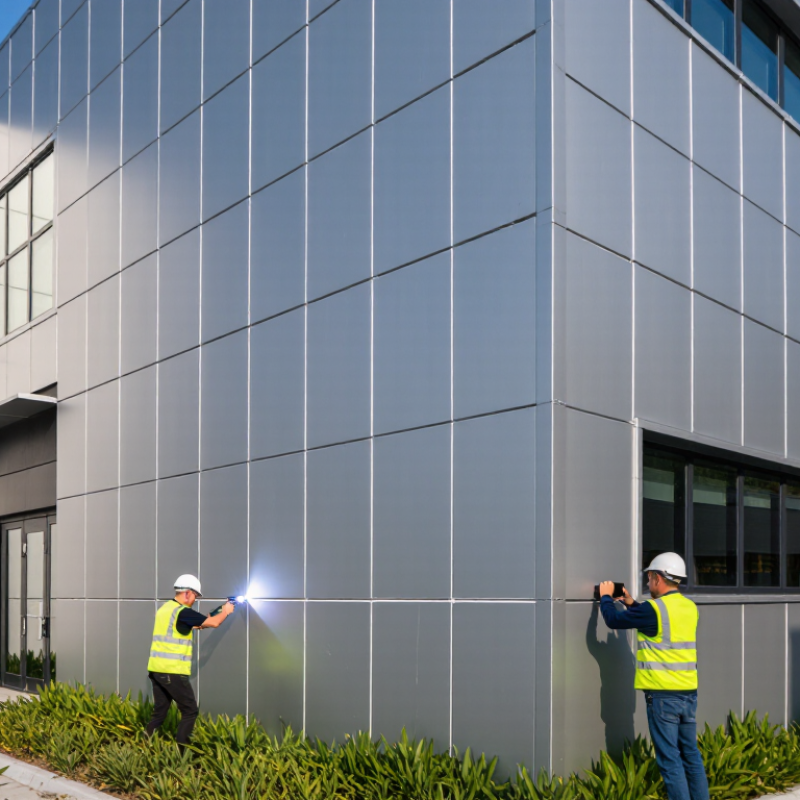
How to Maintain Building Panels for Long Term Use?
Building Panel Materials and Their Long-Term Maintenance Needs
Building panels age differently because materials react to water, sunlight, heat, and movement. Wood-based panels need sealed edges and regular checks for swelling or soft spots. Fiber-cement panels resist moisture better, but cracked coatings can expose vulnerable joints. Metal panels usually need attention around cut edges, fasteners, and drainage paths. Material selection determines the maintenance rhythm.
A practical inspection should begin after heavy rain and continue at least twice yearly. Look for dark stains, loose screws, bubbling paint, open seams, and trapped leaves. Touch exposed surfaces carefully. Softness often signals hidden moisture. Clean panels with mild water and a soft brush. Abrasive tools can damage protective finishes. Keep gutters and flashing clear, because poor drainage shortens panel life faster than ordinary weathering. Replace failed sealant promptly, but confirm compatibility with the panel material.
Maintenance records improve reliability. Note the date, panel location, defect size, and repair material. Photographs from the same angle reveal gradual changes. No schedule is perfect. A sheltered wall may need little work, while a coastal facade may require frequent washing. A common site mistake is focusing on visible stains while missing loose fixings behind them. When damage reaches the substrate, consult a qualified building professional before patching it. Small repairs cost less, but only when the cause is understood.
| Panel Material | Typical Applications | Key Long-Term Risks | Routine Cleaning | Recommended Inspection | Repair and Maintenance Needs | Replacement Indicators |
|---|---|---|---|---|---|---|
| Concrete Panels | Exterior façades, retaining walls, structural and architectural cladding | Cracking, water penetration, carbonation, freeze–thaw damage, chloride-related corrosion of reinforcement | Rinse with clean water and use a pH-neutral cleaner. Avoid aggressive pressure washing that can damage the surface or joints. | At least annually and after severe weather; check cracks, joints, drainage paths, staining, and exposed reinforcement. | Seal suitable cracks, renew failed sealant, repair spalled concrete, and keep drainage and movement joints clear. | Progressive structural cracking, extensive spalling, exposed corroded reinforcement, or persistent water ingress. |
| Fiber-Cement Panels | Ventilated façades, soffits, rainscreen systems, and exterior wall cladding | Moisture at cut edges, coating weathering, impact damage, fastener corrosion, and panel movement | Use low-pressure water and a mild detergent. Do not use abrasive pads or solvent-based cleaners unless approved for the finish. | Every 6–12 months; inspect edges, fixings, joints, coatings, ventilation cavities, and signs of moisture. | Touch up approved coatings, reseal compatible joints, replace damaged fasteners, and replace cracked panels rather than patching extensively. | Delamination, extensive edge deterioration, repeated cracking, loose panels, or loss of weather resistance. |
| Metal Composite Panels | Commercial façades, parapets, canopies, column covers, and interior feature walls | Coating chalking, dents, galvanic corrosion, trapped moisture, joint failure, and thermal movement | Wash with clean water and a non-abrasive, pH-neutral detergent. Clean from top to bottom and rinse thoroughly. | Twice a year in polluted, coastal, or industrial environments; otherwise annually. | Remove contaminants promptly, repair compatible coatings, renew sealants, and replace panels with severe dents or damaged cores. | Perforation corrosion, detached skin, damaged or wet core, permanent deformation, or failed fixing systems. |
| Solid Metal Panels | Façades, roofing details, soffits, screens, and architectural trim | Surface oxidation, salt deposits, scratches, oil-canning, thermal expansion, and dissimilar-metal corrosion | Use clean water and a soft cloth or sponge with a mild detergent. Avoid steel wool, strong acids, and chlorine-based products. | Annually; inspect more frequently near coastlines, roads treated with de-icing salts, or industrial sites. | Remove deposits, treat compatible surface oxidation, maintain isolation between dissimilar metals, and tighten or replace failed fixings. | Through-corrosion, severe distortion, widespread coating failure, or unsafe attachment points. |
| Glass Panels | Curtain walls, windows, balustrades, skylights, and glazed façades | Sealant aging, glass breakage, edge damage, condensation, coating deterioration, and frame corrosion | Use clean water and a non-abrasive glass cleaner with soft tools. Remove cement, paint, and hard-water deposits carefully to avoid scratching. | Every 6–12 months; inspect glazing, gaskets, sealants, drainage holes, frames, and internal condensation. | Renew failed sealants or gaskets, clear drainage channels, correct water leaks, and replace damaged or failed insulated glazing units. | Cracks, edge chips affecting safety, persistent fogging between panes, leaks, or loose glazing components. |
| Natural Stone Panels | Exterior cladding, entrances, feature walls, and interior public areas | Water absorption, staining, efflorescence, freeze–thaw damage, biological growth, and anchor corrosion | Use a stone-compatible pH-neutral cleaner. Avoid acidic cleaners on carbonate stones such as marble and limestone. | Annually; inspect for cracks, displaced panels, open joints, staining, moisture, and condition of anchors. | Repair compatible joints, remove stains using tested methods, maintain drainage, and assess anchors when movement or corrosion is suspected. | Unstable panels, deep cracks, severe delamination, failed anchors, or stone deterioration that compromises safety. |
| Brick or Terracotta Panels | Rainscreen façades, ventilated cladding, decorative walls, and façade accents | Efflorescence, freeze–thaw damage, cracking, mortar or joint deterioration, and moisture behind the cladding | Use soft brushing and clean water; choose cleaners specifically compatible with the product and test them on a small area first. | Annually and after freeze–thaw periods; inspect joints, clips, drainage openings, cracks, and panel alignment. | Clear drainage paths, repair compatible joints, replace cracked units, and investigate recurring moisture before carrying out cosmetic repairs. | Loose or displaced panels, extensive cracking, repeated freeze–thaw failure, or hidden support corrosion. |
| Insulated Sandwich Panels | Industrial buildings, warehouses, cold rooms, agricultural buildings, and controlled environments | Water penetration at joints, damaged coatings, condensation, core moisture, fire-stopping defects, and fastener corrosion | Clean with low-pressure water and a mild detergent. Keep drainage paths and joint areas free of dirt and debris. | Every 6–12 months; inspect seams, flashings, fasteners, coatings, penetrations, interior condensation, and fire barriers. | Renew compatible joint seals, replace corroded fasteners, repair coating damage, and replace panels with wet or crushed cores. | Wet insulation, persistent condensation, failed fire-stopping, exposed core, significant corrosion, or loss of thermal performance. |
Start with a dry inspection for chalking, scratches, loose edges, and discolored sealant. Remove loose grit with clean water. Use lukewarm water, pH-neutral detergent, and a soft microfiber cloth. Work downward. Keep each section wet, then rinse thoroughly. Always test first.
Avoid abrasive pads, metal scrapers, solvents, and stiff brushes. Do not aim high-pressure water at joints. Stronger chemicals are not automatically better. They may weaken adhesion or leave scratches that appear months later.
Inspect both exterior and interior surfaces. Look for rust marks, swollen edges, open joints, hairline cracks, and interior water stains. Check drainage paths and flashing. Angled light can reveal dull films or uneven coating changes. Appearance can lie.
Replace it when the core is saturated, crushed, or structurally weakened. Delaminated skins usually need removal, not cosmetic filling. Cut back to sound material and support the opening. Match thermal and fire performance. A quick patch may hide continuing water movement.
Photograph every defect before work begins. Record panel thickness, moisture levels, fastener spacing, and joint width. Note the date, materials, water temperature, visible changes, and corrective action. Keep the record with the building maintenance file.
Inspect them monthly for loose fasteners, open joints, cracks, stains, and damaged sealant. Check again after heavy rain, strong winds, storms, or construction work. Review records every six or twelve months with a qualified building professional. Schedules may need adjustment.
Clean and dry open seams before applying suitable sealant. Replace loose fasteners with compatible, corrosion-resistant fixings. Follow the panel system’s technical requirements. Test repaired joints with controlled water spray. Do not trust appearance alone.
I once used concentrated cleaner and allowed a stained surface to dry. The mark became wider. Smaller sections work better. Keep surfaces wet and inspect under angled light. Narrow inspections can miss concealed damage behind trim. That deserves reflection.
Learning how to maintain building panels for long term use begins with understanding their materials, protective coatings, and exposure conditions. Different panels may respond differently to moisture, sunlight, temperature changes, and physical impact, so regular inspections are essential. Check for cracks, corrosion, stains, loose fasteners, peeling surfaces, water infiltration, or unusual movement. Identifying these problems early can prevent more extensive damage and reduce repair costs.
Panels should be cleaned with suitable methods that remove dirt without scratching or weakening their protective surfaces. Avoid harsh chemicals, excessive pressure, and abrasive tools unless they are confirmed to be appropriate for the panel material. Minor defects should be repaired promptly, while severely damaged sections may need careful replacement to preserve structural performance and appearance. A preventive maintenance schedule should include routine inspections, cleaning, drainage checks, sealant reviews, and documented repairs. Consistent care helps extend panel service life, maintain safety, and support reliable long-term building performance.

 Homecoxa Panels