How to Ensure Fire Safety in Construction Materials?

Time:2026-09-16 Author:Amelia
0%

How to Ensure Fire Safety in Construction Materials?

Fire safety begins long before materials reach a building site. It starts with careful selection, verified testing, and realistic installation planning. The right question is not simply whether a product is labelled “fire-resistant.” It is how that product performs beside insulation, membranes, fixings, joints, and finishes.

Dame Judith Hackitt, an engineer and former chair of the Building Regulations review, stated, “The current regulatory system for ensuring fire safety in high-rise and complex buildings is not fit for purpose.” Her warning remains important. Materials can pass an individual test yet perform differently within a complete wall, roof, or façade assembly. This is where how to ensure fire safety in construction materials becomes a practical discipline, not a marketing phrase.

A reliable process checks reaction-to-fire classifications, fire-resistance periods, smoke development, and heat release. It also confirms independent laboratory reports and valid certification. On site, workers must protect cavity barriers, seal penetrations, and follow approved installation details. A small unsealed gap around a cable can allow smoke to spread behind a wall. Small details matter.

Experienced project teams record batch numbers, inspect deliveries, and photograph concealed protection before closing walls. They also review substitutions carefully. A cheaper alternative may change the entire fire performance of an assembly.

No checklist is perfect. Human error remains possible. That uncomfortable truth deserves attention. Fire safety improves when designers, manufacturers, contractors, inspectors, and building owners share evidence and challenge assumptions. Safe materials are essential, but disciplined decisions make their protection dependable.
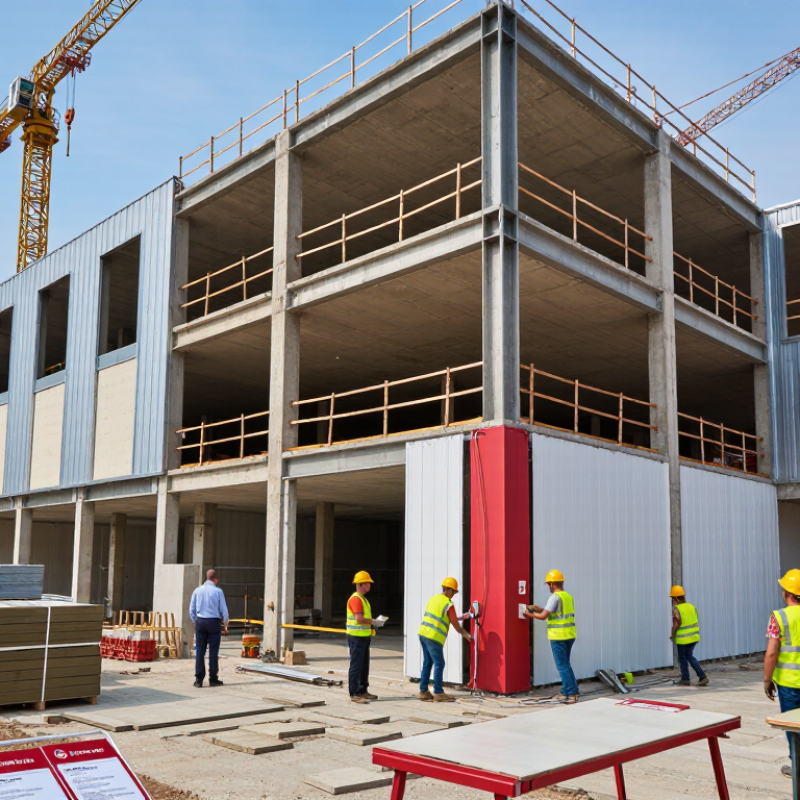
How to Ensure Fire Safety in Construction Materials?

Understanding Fire Risks in Construction Materials

How to Ensure Fire Safety in Construction Materials?

Understanding Fire Risks in Construction Materials

Fire safety begins with understanding how materials behave under heat, not merely checking whether they look solid. Timber can ignite, insulation can melt, and composite panels may hide combustible cores. Smoke often becomes dangerous before flames spread visibly. Small gaps around service penetrations can also create fast, concealed routes for fire.

During site inspections, I examine material storage, cutting waste, temporary protection, and exposed edges. A sealed wall can perform well in testing. Poor installation can change that result. For example, a missing firestop around a cable bundle may allow flames and smoke into another room. Moisture damage, dust, and unapproved substitutions deserve equal attention. They are easy to overlook.

Reliable decisions require tested evidence, clear installation records, and review by qualified fire professionals. Test reports should match the actual thickness, fixing method, joints, and surrounding construction. A material rated alone may perform differently beside another material. This is where project teams sometimes become overconfident. I have seen attractive specifications fail at simple interfaces. Regular inspections, photographed details, and worker training can reduce those gaps. Still, no checklist replaces careful judgment when materials, design, and workmanship interact.

Classifying Materials by Fire Performance and Safety Ratings

How to Ensure Fire Safety in Construction Materials?

Classifying Materials by Fire Performance and Safety Ratings

Fire safety begins with classification, not appearance. Materials should be checked for reaction to fire, smoke production, and burning droplets. A1 and A2 classifications generally indicate limited or no contribution to fire. Lower classes may burn more readily. These ratings must match the building’s use and local regulations. A decorative wall panel can look harmless while producing dense smoke.

Test evidence matters.

Review the product’s declared performance, test method, thickness, installation position, and supporting substrate. A rating may change when the material is fixed over insulation or placed behind a cavity. In some systems, Class A under a surface-burning test does not mean complete fire resistance. Fire resistance ratings, such as 30 or 60 minutes, usually apply to an entire assembly. That assembly includes boards, joints, framing, fasteners, and penetrations.

On a site review, small gaps around service pipes often deserve more attention than large visible surfaces. Firestopping materials must be compatible and installed according to tested details. Keep inspection photographs and delivery records. They help verify what was actually installed. A label alone can mislead. Even careful teams can overlook damaged edges, substituted products, or unsealed joints. I would also question any rating without accessible test documentation. Local authorities may use different classification systems, so project teams should confirm requirements before procurement. When evidence is unclear, selecting a safer alternative is usually wiser than relying on assumption.

How to Ensure Fire Safety in Construction Materials? - Classifying Materials by Fire Performance and Safety Ratings
Material or Rating Category Typical Fire Behavior EN 13501-1 Euroclass ASTM E84 / Related U.S. Performance Common Applications Important Safety Considerations
Representative Construction Materials
Concrete and cement-based products Non-combustible and does not normally contribute fuel to a fire. It can retain structural capacity for a period of time, depending on thickness, reinforcement, moisture, load, and exposure. A1 Generally produces a flame-spread index of 0 and smoke-developed index of 0 when tested as an applicable surface material. Non-combustibility may also be assessed under ASTM E136. Structural frames, floors, walls, fire barriers, masonry units, and panels. Reaction-to-fire classification is not the same as a fire-resistance rating. Spalling, reinforcement temperature, joints, penetrations, and applied finishes must be evaluated.
Clay brick, ceramic tile, and other fired mineral products Non-combustible and generally resistant to ignition and flame spread. A1 Typically achieves flame-spread index 0 and smoke-developed index 0 when tested in an applicable configuration. External walls, masonry construction, floors, wall finishes, and fire-protective linings. Adhesives, grout, backing boards, coatings, and insulation behind the finish may have different fire characteristics.
Unfaced mineral wool insulation Non-combustible mineral fibers; organic binders or facings may contribute a limited amount of combustible content. A1 commonly achieved by unfaced products Commonly achieves flame-spread index 0 and smoke-developed index 0 for qualifying products. Cavity insulation, curtain-wall systems, fire stopping, roofs, ducts, and acoustic assemblies. Confirm the classification of the complete insulation product, including facings, binders, mesh, vapor barriers, and installation method.
Gypsum plasterboard Limited combustibility; chemically bound water can delay temperature rise, while paper facing can contribute to surface burning. A2-s1,d0 is common; the exact class depends on board composition and assembly Many standard products achieve ASTM E84 Class A, with a flame-spread index of 0–25; smoke-developed index must be confirmed from the test report. Partitions, ceilings, shaft walls, fire-rated linings, and protected structural members. Fire performance depends on board thickness, joints, fasteners, framing, insulation, penetrations, and the tested wall or ceiling assembly.
Uncoated glass Does not ignite or support flame spread, but may crack or lose integrity under thermal shock. A1 ASTM E84 is not normally the primary test for glass; it is generally treated as non-combustible when no combustible coating or backing is present. Windows, glazed partitions, façades, doors, and fire-resistant glazing systems. Fire-rated glazing requires a tested assembly, including glass type, frame, seals, beads, and fixing details.
Uncoated steel and stainless steel Does not burn or contribute fuel, but strength and stiffness decrease as temperature increases. A1 for uncoated metallic products ASTM E84 is generally not applicable to structural steel as a surface finish. Structural fire performance is established through fire-resistance testing or calculation. Structural frames, columns, beams, supports, roof systems, and metal components. Non-combustibility does not mean unlimited fire resistance. Section factor, applied protection, connections, load, and restraint conditions are critical.
Uncoated aluminum Does not normally burn as a bulk metal, but it loses strength at elevated temperatures and melts at approximately 660°C. A1 for qualifying uncoated products ASTM E84 is generally not the appropriate test for structural aluminum. Cladding, curtain-wall framing, roof components, doors, and architectural panels. Plastic cores, coatings, thermal breaks, sealants, and insulation can significantly change the fire behavior of the complete system.
Untreated solid wood Combustible; it can ignite, burn, produce smoke, and form a protective char layer that may slow burning in sufficiently thick sections. Often D-s2,d0, subject to species, density, thickness, profile, and installation May fall within ASTM E84 Class B or Class C, depending on species, thickness, surface condition, and test configuration. Flooring, wall lining, roof members, doors, framing, and architectural finishes. Moisture, joints, cavities, coatings, fire retardant treatment, and mounting method can change the result. Use the classification for the exact product and end use.
Fire-retardant-treated wood Combustible material with reduced flame spread when correctly treated and maintained. Product-specific; commonly B or C Often tested to ASTM E84 and may achieve Class A, B, or C depending on the treatment and product construction. Wall and roof assemblies, exterior applications, structural members, and interior finishes. Treatment performance may depend on retention, weathering, machining, thickness, moisture, and field cutting. Certification must cover the intended use.
Polymeric insulation, including EPS, XPS, PUR, and PIR products Combustible to varying degrees; may melt, shrink, produce smoke, or release heat when exposed to fire. Typically varies from B to F depending on formulation, facings, thickness, and assembly Results vary widely; the complete wall, roof, or façade system may require additional testing such as NFPA 285 for certain multi-layer exterior wall assemblies. Thermal insulation, roofs, walls, façades, floors, and sandwich panels. Do not rely on an insulation core rating alone. Evaluate the complete system, fire barriers, joints, cavities, fixings, facings, and combustible adhesives.
Fire Classification Reference Values
Euroclass A1 No contribution to fire under the specified classification tests. A1 Not directly interchangeable with ASTM E84 ratings. Commonly associated with qualifying mineral, concrete, ceramic, glass, and uncoated metallic products. The classification applies to the tested product and intended end-use conditions, not automatically to every assembly containing it.
Euroclass A2 Very limited contribution to fire. A2-s1,d0 indicates limited smoke and no flaming droplets under the classification criteria. There is no direct one-to-one conversion between Euroclass A2 and ASTM E84 Class A. Some gypsum boards, mineral-based composites, and protected panel products. The suffixes are important: “s” refers to smoke production and “d” refers to flaming droplets or particles.
Euroclass B and C Limited or moderate contribution to fire, with performance assessed by ignition, heat release, flame spread, smoke, and droplets. B-s1,d0 to C-s3,d2 Cannot be converted directly to ASTM E84 Class A, B, or C without product-specific evidence. Some treated wood, polymeric products, coated panels, and composite materials. Use the exact tested classification, including smoke and droplet suffixes, rather than relying only on the main letter.
ASTM E84 Class A Lowest flame-spread range defined by the standard for tested surface materials. Not an EN 13501-1 classification. Flame-spread index: 0–25; smoke-developed index is reported separately and may be up to 450 within the class definition. Interior wall and ceiling finishes, panels, boards, and surface coverings. ASTM E84 results do not by themselves establish fire-resistance duration, combustibility of the whole assembly, or compliance with every building code requirement.
ASTM E84 Class B Intermediate flame-spread range for tested surface materials. Not an EN 13501-1 classification. Flame-spread index: 26–75; smoke-developed index is reported separately. Some wood products, treated products, and interior finish materials. Results apply to the tested specimen and mounting method. Field installation can produce different behavior.
ASTM E84 Class C Higher permitted flame-spread range than Classes A and B. Not an EN 13501-1 classification. Flame-spread index: 76–200; smoke-developed index is reported separately. Selected combustible finish materials and wood-based products. Check occupancy, location, thickness, substrate, and code limitations before approving the material.
Important: Fire classifications are not universal properties of a material name alone. The final rating can change with thickness, density, surface finish, backing, joints, fixings, insulation, ventilation, and installation method. Always verify the current third-party test report, certification, and local building-code requirements for the exact product and assembly.
Reference standards: EN 13501-1 for reaction-to-fire classification; ASTM E84 for surface burning characteristics; ASTM E136 for behavior of materials in a vertical tube furnace; NFPA 285 for certain exterior wall assemblies containing combustible components.

Selecting Compliant Materials for Different Building Applications

How to Ensure Fire Safety in Construction Materials?

Selecting Compliant Materials for Different Building Applications

Fire safety begins with the building’s use, not a product catalogue. A stair enclosure needs different performance from a kitchen wall or warehouse roof. Specify reaction-to-fire and fire-resistance requirements for each location. Check flame spread, smoke production, insulation, and structural stability. These properties are related, but they are not interchangeable. A material can resist heat well and still produce dangerous smoke.

Use test reports, classification documents, and installation instructions from qualified sources. Confirm that the tested assembly matches the proposed wall, floor, ceiling, or façade. Thickness, fixings, joints, cavities, and surface finishes can change performance. On active projects, I have seen small gaps around service pipes undermine otherwise careful work. Fire-stopping should suit the substrate and the movement expected around each penetration. Local code officials and accredited laboratories can clarify uncertain applications.

Site conditions deserve equal attention. Damp storage can damage boards, coatings, and insulation before installation. Cutting materials without approved protection may expose combustible cores. Keep delivery records and lot information, then inspect damaged items before use. This process is practical, though not flawless. Product documents can be difficult to interpret, and assumptions sometimes survive too long. A short review with the designer, installer, and fire consultant may catch a serious mismatch before walls close. On site, the smallest unsealed joint may deserve the most attention.

Installing and Handling Materials to Reduce Fire Hazards

Fire safety begins when materials arrive, not when walls are closed. NFPA’s Fires in Structures Under Construction report estimated 4,440 construction-site structure fires annually from 2017 to 2021. These fires caused approximately 250 million dollars in yearly property damage. Poor storage can turn a manageable incident into rapid fire spread.

Keep insulation, timber, packaging, and adhesives away from ignition sources. Store them on raised pallets, under suitable cover, and with clear access for inspection. Install fire-resistant boards tightly, without broken edges or open joints. Seal service penetrations immediately; a small unsealed gap can act like a hidden chimney. NIST fire research shows that concealed cavities and combustible assemblies can accelerate heat and smoke movement.

Hot-work areas need physical separation from stored materials. Remove scrap before cutting or welding begins. Assign a trained person to monitor sparks during work and afterward. The exact monitoring period should follow the project’s fire-risk assessment, not habit alone. Temporary wiring also deserves attention. Damaged cords, overloaded outlets, and improvised connections create preventable ignition points.

A practical inspection should check labels, storage height, damaged packaging, and blocked exits. It should also record who corrected each problem. This detail is often missed. I would not rely only on delivery certificates or drawings. Materials may be compliant, yet installed carelessly. Daily supervision, documented checks, and honest reporting of near misses provide stronger protection than paperwork alone.

Inspecting and Maintaining Fire-Safe Construction Materials

Fire-safe construction materials can lose their protection when they are poorly stored, damaged, or incorrectly installed. Regular inspection must begin before materials reach the work area. Check product labels, fire ratings, batch details, and approved installation instructions. Keep insulation, fire doors, sealants, and boards dry and covered. Moisture changes their performance.

Look closely at edges, joints, and penetrations. Small gaps around pipes can allow smoke and flames to spread. Inspectors should check whether fire-stopping materials are continuous and firmly bonded.

On one project, a thin crack around a cable opening seemed harmless. It was not. The repair required removing loose material and resealing the entire edge.

Site records should include photographs, dates, locations, and corrective actions.

Maintenance continues after installation. Protect fire doors from forced movement, blocked closers, and damaged seals. Replace cracked boards, crushed insulation, and hardened sealants promptly.

Do not paint over warning labels or cover inspection points. Trained personnel should compare site conditions with approved drawings and current safety requirements.

Independent checks can expose mistakes that daily teams overlook.

They are worth the time.

Some inspections still become rushed. That is a weakness. Weather, trade changes, and late deliveries can affect materials unexpectedly.

Review high-risk areas after those events, even when an earlier inspection passed. Keep damaged materials separate, clearly marked, and unavailable for reuse.

Clear records support safer decisions when responsibility changes between contractors.

FAQS

Why can solid-looking construction materials still create fire risks?

Timber may ignite, insulation may melt, and composite panels may conceal combustible cores. Smoke can become dangerous before flames appear. Appearance is not evidence.

What should fire-performance classifications tell project teams?

Classifications indicate reaction to fire, smoke production, and burning droplets. A1 and A2 generally show limited contribution to fire. Check local requirements too.

Does a 60-minute rating apply to one material alone?

Usually, no. It often applies to a complete assembly, including boards, joints, framing, fasteners, and penetrations. One tested part cannot guarantee the whole wall.

Why are small gaps around pipes and cables important?

Unsealed gaps can carry flames and smoke into another room. They may behave like hidden chimneys. Firestopping must match tested installation details.

How should combustible materials be stored on a construction site?

Keep timber, insulation, packaging, and adhesives away from ignition sources. Use raised pallets and suitable covers. Keep inspection routes and exits clear.

What precautions are needed during cutting, welding, or other hot work?

Separate hot-work areas from stored materials. Remove scrap before work begins. A trained person should watch for sparks during and after the task.

What installation problems commonly weaken fire safety?

Broken board edges, open joints, damaged products, and unapproved substitutions can reduce performance. Poor workmanship may defeat a strong design. Details matter.

What evidence should teams review before accepting fire-rated materials?

Check test methods, thickness, fixing methods, joints, supporting surfaces, and installation positions. Keep delivery records and photographs. A label alone can mislead.

How can inspections improve fire safety during construction?

Inspect storage, temporary wiring, penetrations, exposed edges, and cutting waste regularly. Record who corrected each issue. I might still miss something, so independent review helps.

What should teams do when fire-performance evidence is unclear?

Pause the decision and seek qualified professional advice. Confirm local requirements before procurement. Choosing a safer alternative may be wiser than trusting an assumption.

Conclusion

How to ensure fire safety in construction materials begins with understanding how different products may ignite, spread flames, produce smoke, or fail under high temperatures. Materials should be evaluated according to their fire performance, including combustibility, flame spread, smoke development, and resistance duration. Selecting products with appropriate safety ratings and verified compliance is essential for walls, floors, roofs, insulation, doors, and other building applications. The right choice should reflect the building’s design, occupancy, location, and expected fire exposure.

Safe installation and handling are equally important. Materials must be stored away from ignition sources, installed according to approved specifications, and protected from damage or improper modification. Fire stopping, sealing, and adequate separation should be maintained around openings and service routes. Regular inspections can identify deterioration, gaps, contamination, or unauthorized changes. Ongoing maintenance, documentation, and timely replacement of damaged components help preserve the building’s fire-safe performance throughout its service life.

Amelia

Amelia

Amelia is a seasoned marketing professional with a wealth of expertise in our company’s core offerings. With an unwavering passion for driving growth and innovation, she plays a pivotal role in shaping our marketing strategies and enhancing brand visibility. A key aspect of her responsibilities......