How to Choose Between Traditional and Modern Building Panels

Time:2026-09-21 Author:Aria
0%

Choosing the right building panel affects far more than a project’s appearance. It influences structural performance, indoor comfort, installation time, maintenance, and long-term value. This decision becomes clearer when designers examine the site, climate, building use, and available construction skills.

A common search question is, “what is the difference between traditional and modern building panels?” Traditional panels often rely on familiar materials, established methods, and local trade experience. Brick slips, timber boards, concrete panels, and mineral-based systems can provide durability and a recognisable visual character. Modern panels may offer lighter construction, improved insulation, faster installation, or integrated moisture control. Some products also include recycled content or factory-finished surfaces. Their benefits depend on verified specifications, not marketing language.

Details matter. A panel that performs well in a dry warehouse may struggle on a coastal façade. A lightweight system may reduce structural loads but require careful fixing around windows. Traditional materials can feel dependable, yet they may demand more labour and regular upkeep. Modern systems can save time, but replacement parts or trained installers may be limited. Neither option is automatically better. Sometimes, the most efficient choice creates unexpected maintenance concerns later. That deserves honest review. Comparing fire performance, thermal values, acoustic ratings, weather resistance, embodied carbon, warranties, and installation guidance creates a more reliable basis for selection. This guide explores those differences and helps project teams choose panels that suit real conditions, not just impressive brochures.
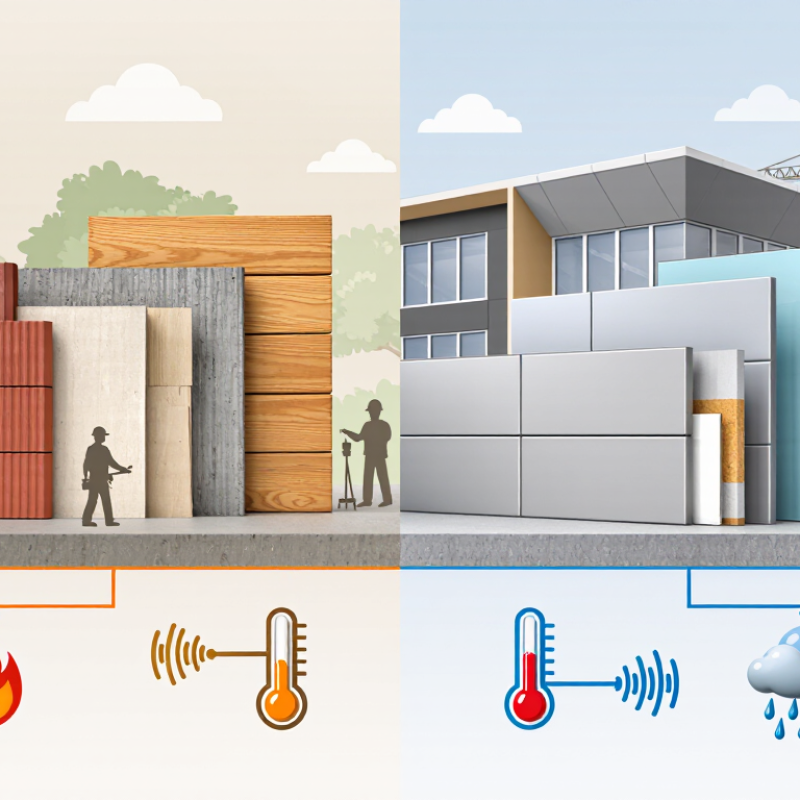
How to Choose Between Traditional and Modern Building Panels

Definition and Evolution of Traditional and Modern Building Panels

Traditional and modern building panels differ in more than appearance. Traditional panels usually rely on familiar materials, including timber boards, masonry units, and concrete elements. Their performance depends heavily on site craftsmanship, joint quality, and local climate. Modern panels are engineered assemblies. They may combine structural skins, insulation, moisture control, and finished surfaces in one factory-made unit.

This evolution reflects changing building demands. The 2023 Global Status Report for Buildings and Construction states that buildings consumed about 34% of global energy and produced approximately 37% of energy and process-related carbon emissions in 2022. These figures explain the growth of insulated composite panels, structural insulated panels, and prefabricated systems. They can reduce thermal bridging and shorten installation time. However, “modern” does not automatically mean better. Poor detailing can still create condensation, air leakage, or difficult repairs.

Selection should begin with the building’s actual conditions. Traditional panels may suit projects requiring regional materials, simple maintenance, or strong craft continuity. Modern systems often suit tight schedules and demanding energy targets. The International Energy Agency reports that space cooling demand has increased rapidly worldwide, making envelope performance more important. Yet laboratory values can disappoint on site. Check tested fire performance, moisture resistance, acoustic ratings, embodied carbon, and replacement access. A panel that looks efficient on paper may perform poorly after careless cutting or incomplete sealing.

How to Choose Between Traditional and Modern Building Panels

Definition and Evolution of Traditional and Modern Building Panels

Traditional building panels and envelope systems commonly rely on materials such as solid masonry and timber. Modern panels increasingly combine insulation, structural support, moisture control, and surface finishes in a single factory-produced element. Lower thermal conductivity generally indicates better insulation performance.

The chart shows representative thermal-conductivity values at approximately 20°C, expressed in watts per metre-kelvin (W/m·K). Actual performance varies with density, moisture content, product composition, joints, and installation quality.

Key Differences in Materials, Design, and Manufacturing

Choosing a building panel starts with material performance, not appearance.

Traditional panels often use concrete, brick, timber, or masonry assembled on site. Modern panels may combine insulated cores, metal skins, fiber cement, or engineered composites. The difference is visible in the wall section: traditional construction usually needs separate insulation and weather barriers, while modern systems can integrate them within one panel.

Manufacturing also changes the risk profile. Factory production can control cutting, curing, and joint tolerances more consistently than exposed site work. It can also reduce waste, although transport and replacement parts may offset those gains.

The GlobalABC 2023 Buildings Global Status Report states that buildings and construction consumed 32% of global energy and produced 34% of global carbon dioxide emissions in 2022.

Therefore, panel selection should examine both operational energy and embodied carbon. Environmental Product Declarations help, but comparisons remain imperfect because regional electricity mixes and service lives differ.

Design flexibility creates another clear gap. Traditional panels allow familiar repairs and local material matching, especially on irregular façades. Modern panels support faster installation, slimmer wall assemblies, and precise openings for windows or services.

Site experience shows that a five-millimeter joint error can affect waterproofing and visual alignment. That detail matters.

The International Energy Agency notes that building codes and envelope efficiency strongly influence energy demand. Yet a highly engineered panel can still fail when installers lack training or drawings are incomplete. Durability, maintenance access, fire performance, and verified test data deserve equal attention, not just a low purchase price.

Performance Comparison: Strength, Insulation, and Durability

Traditional and Modern Building Panels: A Practical Performance Comparison

Strength is not simply a matter of weight. Traditional masonry and concrete offer excellent compression resistance, but they can crack after settlement or repeated impact. Modern panels often weigh less and provide strong bending performance through layered cores and reinforced skins. Their real reliability depends on joints, fasteners, and installation accuracy. A strong panel can still fail at a weak connection.

Insulation is where modern systems often gain an advantage. A continuous foam or mineral-based core can reduce heat transfer through walls. However, gaps around windows and metal framing may create thermal bridges. Traditional walls can perform well with added insulation, though they usually require more thickness. Durability also varies. Moisture, sunlight, freeze-thaw cycles, and poor drainage can shorten any system’s service life. Field inspections often reveal water damage near unsealed edges, not across the panel surface. My first assumption was that thicker materials always lasted longer. That judgment was too simple.

Tips: Compare tested strength values, thermal ratings, and moisture resistance under similar conditions. Check the panel’s edge details and connection design. Ask for independent test reports, installation guidance, and maintenance requirements. Do not judge insulation by touch alone. A warmer surface may hide weak performance inside. Review local climate exposure before choosing. Some modern panels need careful sealing, while traditional walls may need substantial reinforcement.

Evaluating Installation Methods, Maintenance, and Lifecycle Costs

Choosing between traditional and modern building panels starts with the installation method, not the showroom appearance. Traditional masonry-style panels often need skilled alignment, heavier framing, and more site preparation. Their installation can tolerate small adjustments, but wet work may slow progress during cold or rainy conditions. Modern lightweight panels usually arrive in larger sections and require fewer structural supports. They can shorten installation time, especially on tight urban sites. However, accurate measurements are critical. A small error can create visible gaps or expensive cutting on site.

Maintenance changes the long-term calculation. Traditional surfaces may resist minor impact, yet joints can require repointing and careful water inspections. Modern panels often have sealed connections and replaceable surface layers. That sounds simpler, but damaged finishes may be difficult to match after several years. I have seen owners focus on the initial labor savings and overlook access equipment, sealant renewal, and specialist repairs. That was an expensive lesson. Lifecycle costing should include purchase, transport, installation, cleaning, repairs, energy performance, and eventual removal. A cheaper panel is not always cheaper over thirty years. Energy savings also depend on insulation continuity, not panel type alone. Ask for tested performance data, maintenance intervals, and realistic repair procedures. Request a sample installation. It reveals more than a brochure. Operational conditions matter. Coastal air, freeze-thaw cycles, fire requirements, and local labor skills can change the preferred choice. Allow a contingency budget; construction rarely follows the first estimate exactly.

Selecting the Right Panel Type for Specific Building Requirements

Panel selection should begin with the building’s actual demands, not its appearance. Traditional masonry panels may suit projects needing mass, impact resistance, and familiar repair methods. Modern insulated panels can reduce installation time and improve thermal continuity. However, a thinner panel is not automatically more efficient.

Climate changes the decision. In humid regions, designers should examine vapor control, drainage, and mold resistance. In cold regions, they should compare U-values and thermal bridging around joints. The 2023 Global Status Report for Buildings and Construction reported that buildings and construction represented about 37% of global energy-related emissions.

Better envelope performance matters.

Still, operational energy is only part of the picture. The panel’s manufacturing, transport, maintenance, and replacement cycles also deserve review.

Fire rating, acoustic performance, wind loads, and local labor skills should be tested against project requirements.

The 2022 World Green Building Trends report found that energy efficiency remained a leading green-building priority across surveyed markets. That supports careful insulation choices, but the report does not make every modern system suitable. A lightweight panel may need stronger framing in high-wind zones. Traditional panels may create slower installation and heavier foundations.

Sometimes, the practical choice is mixed.

Use robust panels near loading areas and higher-performing panels across conditioned walls. Specifications should include tested performance, not hopeful claims. I have seen projects overvalue quick installation and underestimate joint detailing. That mistake can quietly erase expected energy savings.

FAQS

What materials are commonly used in traditional and modern building panels?

Traditional panels often use concrete, brick, timber, or masonry. Modern panels may combine insulated cores, metal skins, fiber cement, or engineered composites.

How do modern panels simplify wall construction?

They can combine insulation and weather protection in one panel. Traditional walls usually need separate layers. Fewer layers can save installation time.

Does factory manufacturing improve panel quality?

Factory production can control cutting, curing, and joint tolerances more consistently. It may also reduce waste. Transport and replacement parts can reduce those benefits.

Which panel type provides better insulation?

Modern panels often provide stronger insulation through continuous cores. Gaps near windows, fasteners, or metal framing can create thermal bridges. Details matter more than appearance.

Are traditional panels stronger than modern panels?

Traditional masonry and concrete resist compression well. Modern panels can offer strong bending performance with layered cores and reinforced skins. Connections remain critical.

How does moisture affect panel durability?

Moisture often causes damage near unsealed edges and poor drainage points. Sunlight and freeze-thaw cycles can also shorten service life. Water always finds weak details.

What should buyers check before selecting a panel?

Compare tested strength, thermal ratings, moisture resistance, fire performance, and service life. Review independent test reports and installation guidance. Do not rely on touch alone.

Can a highly engineered panel still fail?

Yes. Poor installation, incomplete drawings, or weak joints can undermine excellent materials. A five-millimeter joint error may affect waterproofing and alignment.

How should environmental impact be compared?

Examine operational energy and embodied carbon together. Environmental declarations can help, but regional electricity mixes and service lives differ. The comparison may remain imperfect.

Is a thicker panel always more durable?

No. Durability depends on moisture control, drainage, connections, and exposure. My earlier assumption was too simple. Thickness alone proves little.

Conclusion

Traditional building panels are typically made from familiar materials such as brick, concrete, timber, or solid masonry, and they reflect construction methods developed over many generations. Modern building panels often use engineered composites, insulated cores, recycled materials, or lightweight metal and fiber-based layers. The key question, “what is the difference between traditional and modern building panels,” involves more than appearance: it includes material composition, design flexibility, manufacturing precision, and production efficiency.

When choosing between them, compare structural strength, thermal and acoustic insulation, moisture resistance, fire performance, and expected service life. Traditional panels may offer a proven appearance and strong familiarity among local builders, while modern systems can provide faster installation, improved energy efficiency, and greater dimensional consistency. Consider maintenance requirements, repair access, transportation, labor needs, and total lifecycle cost rather than focusing only on the initial price. The best panel type depends on the building’s climate, purpose, structural demands, appearance, budget, construction schedule, and long-term performance goals.

Aria

Aria

Aria is a dedicated marketing professional with a deep passion for innovative strategies and a keen understanding of our company's product offerings. With a wealth of experience in the industry, Aria excels at crafting engaging content that highlights the unique features and benefits of our......